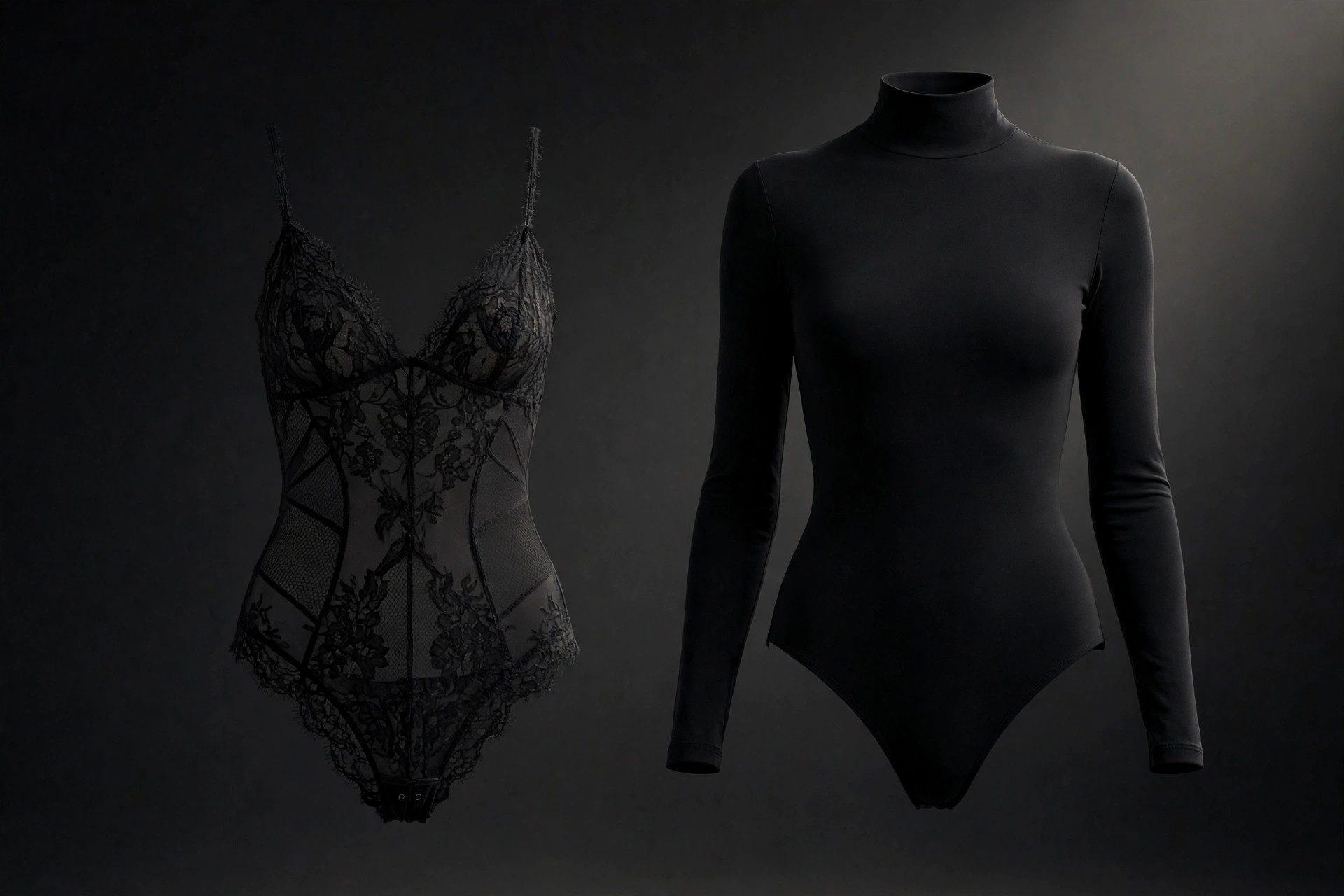
If you’ve ever opened two product pages — one called a “teddy,” one called a “bodysuit” — and struggled to spot the difference, you’re not missing anything. The two terms overlap far more than most guides admit.
Both describe one-piece garments that cover the torso and close at the crotch. The honest distinction is one of tendency, not definition: “bodysuit” usually leans toward fashion and layering, while “teddy” usually leans toward lingerie-first styling. But retailers regularly use the terms interchangeably — sometimes on effectively the same garment.
So the product name alone won’t tell you what you’re buying. This guide teaches you to read the garment itself: its fabric, coverage, support, closures, and fit — so you can choose with confidence no matter what the label says.
Why the Confusion Exists: Retail Labels Overlap
The confusion isn’t your fault. It’s built into how the industry names things.
What the terms literally describe. At their simplest, both words point to the same silhouette: a single garment covering the torso from shoulder to hip, with a closed bottom. That’s why the categories bleed into each other.
How retailers actually use the terms. Look at real lingerie retail and the overlap becomes obvious:
- Major retailers commonly merchandise the two together. Victoria’s Secret, for example, groups them in a single shared “teddies and bodysuits” shopping category — an implicit admission that shoppers browse them as one territory.
- Product names blend the words. Listings at retailers like Savage X Fenty have been observed combining both terms in a single product name (think “lace teddy bodysuit”) — which only makes sense if the terms aren’t mutually exclusive.
- Smaller lingerie brands say the quiet part out loud. Bliss Tulle, a lingerie label, describes the two names as “essentially the same,” adding that when a bodysuit is called a teddy it is “typically a little bit sexier.” That’s a styling tendency, not a technical boundary.
- Even the formal definition hedges. Wikipedia defines the teddy as “similar to a one-piece swimsuit or bodysuit, but typically looser and sheerer” — similar to, typically. Not distinct from.
The takeaway. “Teddy” and “bodysuit” are overlapping retail terms for neighboring territory — not two sealed boxes with a wall between them. Any guide that pretends otherwise is inventing a rule the market doesn’t follow. The useful question was never “which label is it?” It’s “what is this garment, and does it do what I want?”
Ignore the Name — Read the Garment: The 8-Point Inspection
When terminology is inconsistent, construction is your reliable source of truth. Before buying any one-piece — whatever it’s called — run it through these eight checks. Product photos and the details section usually reveal all of them if you know what to look for.
- Fabric. Is it a knit (jersey, microfiber, ribbed knit) or a lingerie fabric (lace, mesh, satin, embroidered tulle)? Knits generally signal layering and everyday wear; lace and mesh signal lingerie-first styling. But lace bodysuits exist, and so do microfiber teddies — fabric is a clue, not a verdict.
- Opacity. Sheer, semi-sheer, or opaque? Zoom in on product photos and check whether skin shows through. Opacity decides more about wearability than the product name ever will: sheer reads as bedroom; opaque can go under a blazer or stand alone as a top.
- Coverage. Study the neckline, back, and leg cut. A high neckline with full back coverage behaves very differently from a plunge front with an open back — regardless of which word is on the tag.
- Cup and support construction. Is the bust structured (underwire, molded cups, boning, seamed cups) or unstructured (unlined, bralette-style, shelf lining)? Structured busts offer more built-in support; unstructured ones trade support for softness and a natural shape. This matters more than any label for comfort and for whether you’ll want a bra underneath.
- Strap adjustability. Look for sliders or convertible straps. Adjustable straps let you fine-tune how the garment sits on the torso — fixed straps give you no such option, which matters most when torso length is borderline.
- Crotch and gusset construction. Most one-pieces close at the crotch with snap buttons; some use hook-and-eye closures; others are pull-on with no closure at all (leotard-style). Snaps are the most common — but they are not universal, on bodysuits or teddies. Check the details section rather than assuming.
- Torso length and stretch. This is the number-one fit variable in one-piece garments, and the one product pages describe least. Look for fabric content with elastane or spandex (stretch) and consider whether the garment offers tall or long-torso sizing. Stretch forgives; a non-stretch one-piece in the wrong torso length does not.
- Intended styling cues. How is it photographed and described? Styled on a model in a bedroom setting with garters reads lingerie-first; styled tucked into jeans or under a blazer reads fashion. Retailers style garments for the use they intend — treat the styling as data, not decoration.
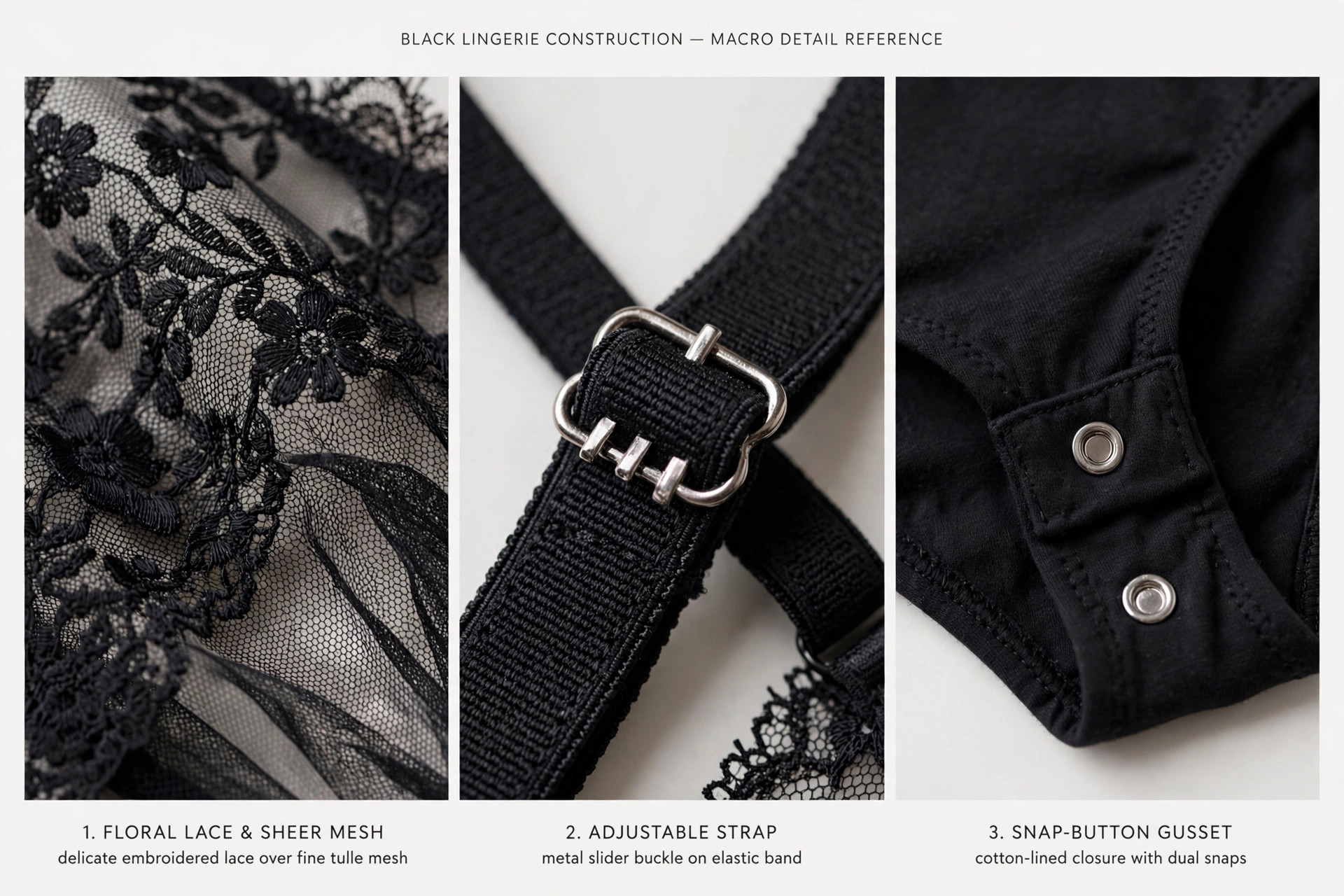
Run any “teddy” or “bodysuit” through these eight points and you’ll know more about it than the product name ever told you.
Bodysuit vs Teddy: The Honest Comparison
With the overlap acknowledged, here are the genuine tendencies — framed honestly, because exceptions are everywhere.
| Feature | Bodysuit tends to | Teddy tends to |
|---|---|---|
| Primary presentation | Fashion and layering | Lingerie-first styling |
| Fabrics | Opaque knits: jersey, microfiber, ribbed | Lace, mesh, sheer panels, satin |
| Opacity | Usually opaque | Often sheer or semi-sheer |
| Bust structure | Often unstructured or lightly lined | Ranges from unstructured to fully structured |
| Coverage | Often fuller; designed to be seen in public | Often more revealing; designed for private wear |
| Closures | Usually snap gusset; sometimes pull-on | Usually snap gusset; sometimes pull-on |
| Layering under clothes | Well suited — smooth and opaque | Depends — texture and sheerness can show |
| Worn as outerwear | Common — styled as a top | Less common — depends on opacity and coverage |
| Lingerie-first styling | Possible, especially lace styles | The default presentation |
| Fit considerations | Torso length is the key variable | Torso length is the key variable |
Notice the last row: fit doesn’t care about the label. Torso length, bust fit, and stretch decide comfort in both.
Which Should You Buy? Decide by How You’ll Wear It
Forget the dictionary. Choose by the job you want the garment to do.
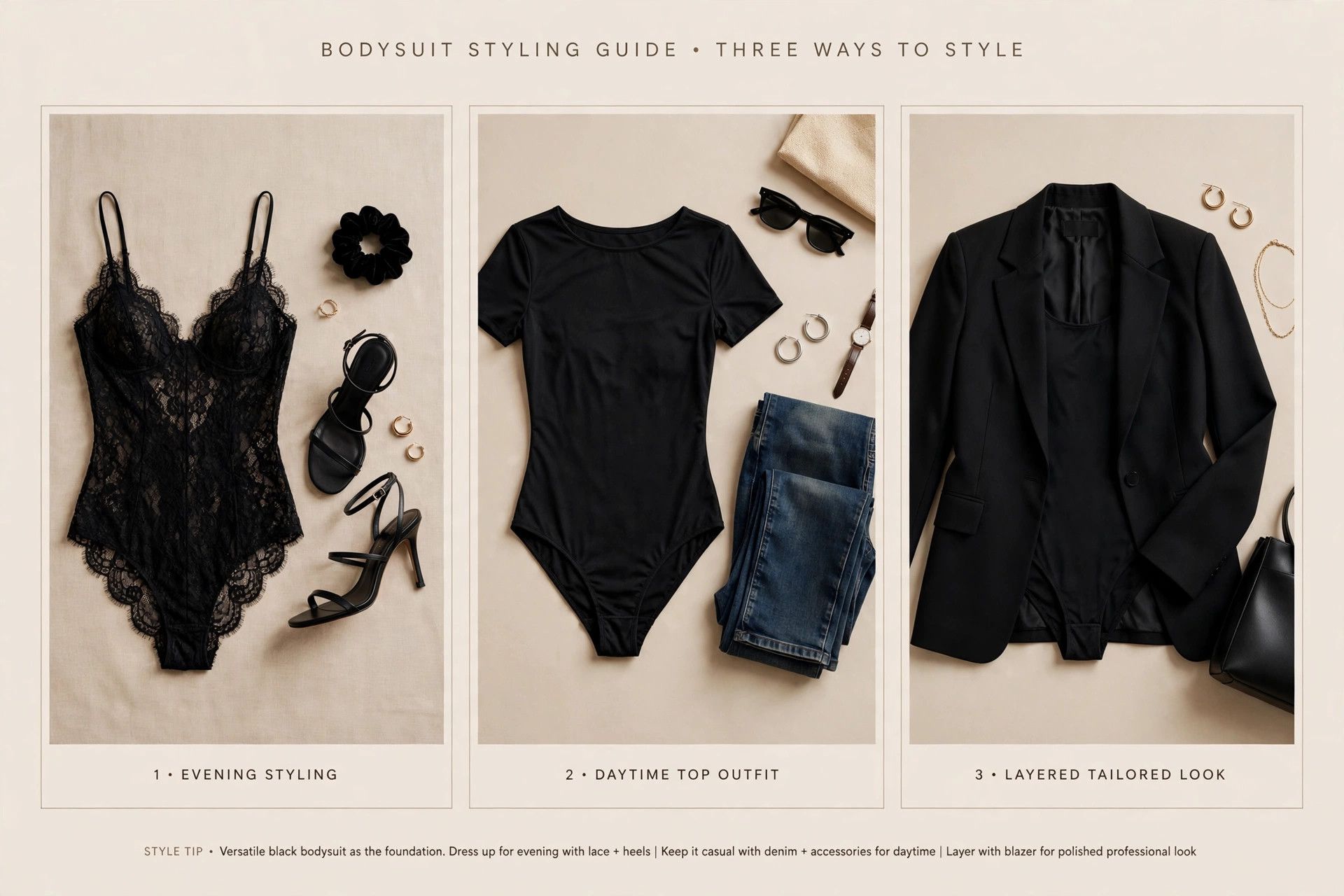
For lingerie-first wear — bedroom, date night, honeymoon. Look for teddy-leaning construction: lace or mesh, sheerness, delicate straps, thoughtful bust detailing. The word “teddy” on the tag correlates with this styling, but verify with the 8-point check — plenty of garments labeled “bodysuit” are cut for exactly this purpose.
For wearing underneath clothing. Prioritize opaque, smooth fabrics (microfiber, jersey) with minimal texture, and consider thong or seamless bottoms to avoid visible lines. Sheer lace will show through thin fabrics — that’s physics, not opinion.
For wearing as a top — with jeans, skirts, or trousers. You want opaque, with a neckline you’re comfortable showing in public. Snap closures earn their keep here (practical for the bathroom). Many pieces labeled “teddy” work perfectly as tops if the opacity and coverage check out — the name doesn’t disqualify them.
For layering under blazers, cardigans, or jackets. Smooth fabrics and adjustable straps matter most. A lace bodysuit can layer beautifully under a blazer; a heavily textured teddy may bunch or show through.
For a special occasion. Match the garment to the outfit’s neckline and back — an open-back dress rules out most one-pieces regardless of label. When in doubt, the 8-point inspection beats the product name.
For mixed lingerie-and-fashion use. This is where the overlap becomes an advantage: a lace bodysuit with good opacity can move from date night to dinner out. Buy the construction, not the word.
Fit Reality: What Actually Goes Wrong With One-Pieces
This is the section most comparison guides skip — and the one that decides whether you’ll actually wear the garment.
Torso length: the make-or-break measurement
One-piece garments live or die on torso length. Here’s how to diagnose it:
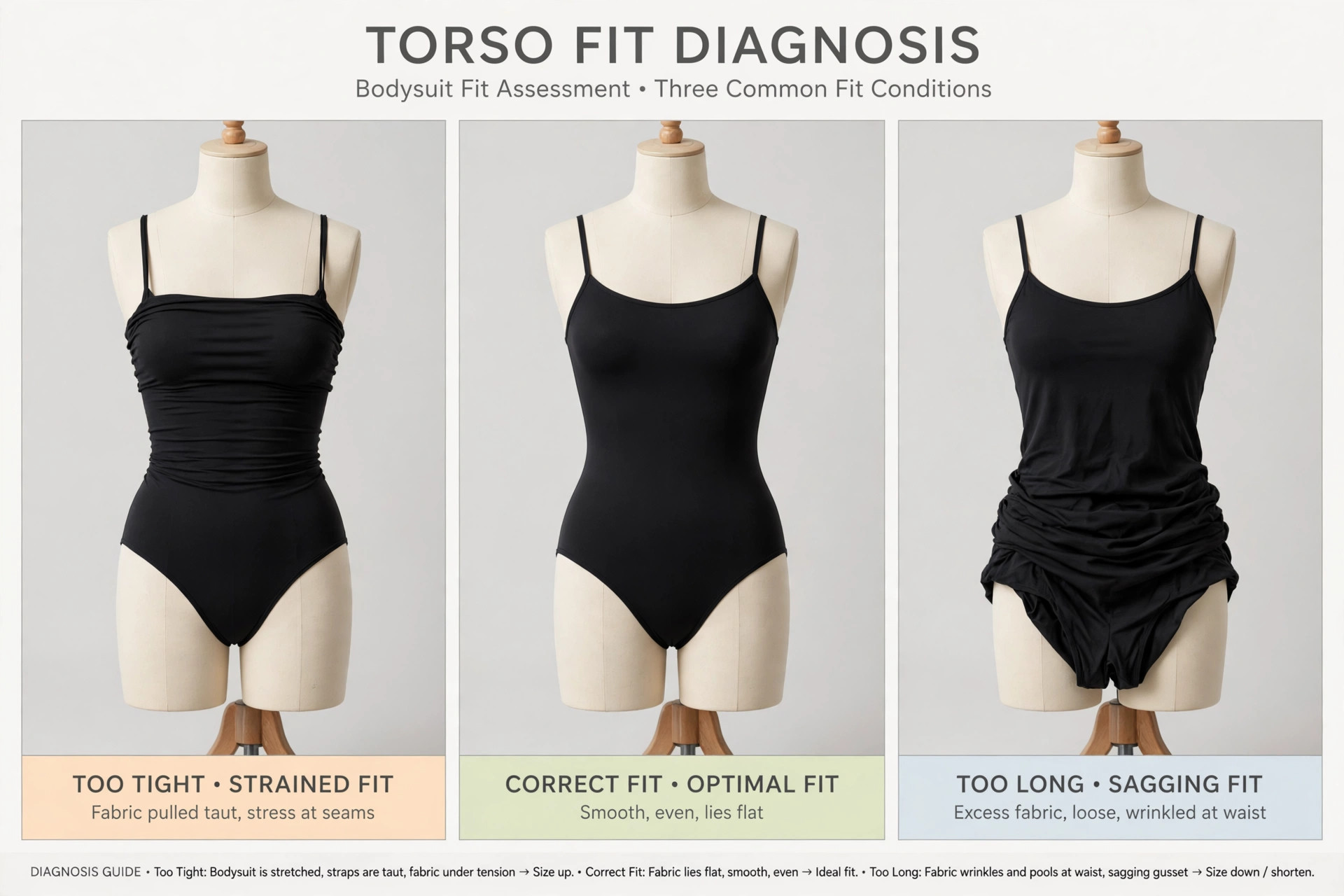
Too short — you’ll feel pulling at the shoulders or straps, uncomfortable tension at the crotch, the garment riding upward through the day, and the cups or bust area sitting too low or being dragged out of position. Shoulder pull is the classic symptom.
Correct — the garment follows your torso without excessive vertical tension. The neckline, waist shaping, and bust sit where the design intends, and the crotch closure rests comfortably without pulling.
Too long — excess fabric wrinkles or pools at the waist or torso, the crotch area feels loose rather than secure, and the garment shifts instead of staying positioned.
If you’re between sizes, torso length usually deserves priority over bust or hip measurements — a slightly roomy hip is far more wearable than a too-short torso. Adjustable straps can compensate a little, but they can’t fix a fundamentally short torso. Where brands offer tall or long-torso options, take them seriously.
Bust construction: structured vs. unstructured
Structured busts — underwire, molded or seamed cups, sometimes light boning — provide built-in support and shaping. They suit larger busts and anyone who wants lift without an additional bra.
Unstructured busts — unlined cups, bralette-style construction, shelf lining — prioritize softness and a natural shape over support. They’re comfortable and often beautiful, but they won’t do a bra’s job.
Whether to wear a bra underneath comes down to construction plus neckline and back design. A structured, opaque bodysuit with a standard back usually needs nothing underneath. A sheer or low-back teddy may pair with a strapless or adhesive bra — or nothing at all, depending on the look you want. If the bra you layer underneath has a band that rides up, that’s a fit issue worth fixing on its own — see our guide to why bra bands ride up.
Bottom coverage: thong, cheeky, brief
The bottom cut affects comfort, visible lines, and the overall look:
- Thong — minimal back coverage; the practical choice under fitted clothing.
- Cheeky — partial coverage; a middle ground many find most comfortable.
- Brief / full coverage — the most coverage; can show lines under very fitted fabrics but feels secure.
None is objectively better — it’s anatomy, outfit, and preference.
Stretch and recovery
Check the fabric content for elastane, spandex, or Lycra. Stretch determines comfort; recovery — the fabric’s ability to snap back — determines whether the garment keeps its shape through a day of wear. A one-piece with poor recovery bags at the waist by evening. This is one detail worth reading the fabric composition for.
A note on sizing honesty. There is no universal one-piece sizing formula, and “size up for torso length” is advice that can backfire if the bust and hips then swim. Use the brand’s size chart, check whether garment measurements (or a torso-loop measurement) are listed, and favor retailers that publish them.
Practical Questions, Answered Honestly
Do you wear a bra under a teddy? Sometimes. A structured teddy with underwire or molded cups usually needs nothing. An unstructured or sheer teddy may benefit from a strapless or adhesive bra — or nothing, if the styling calls for it. The back and neckline design decide more than the label.
Can you wear a teddy as a bodysuit? If the opacity and coverage work, yes. Plenty of garments labeled “teddy” are cut like bodysuits — opaque enough, with necklines that work in public. Check the garment against points 2 and 3 of the inspection framework rather than trusting the name.
Can a bodysuit be lingerie? Absolutely. Lace and mesh bodysuits are designed, marketed, and worn as lingerie. “Lingerie” describes an intended use and styling, not a product category boundary.
Do all bodysuits have snap closures? No. Snaps are the most common crotch closure, but pull-on styles and hook-and-eye closures exist. Always check the details section.
Do all teddies have crotch closures? No — same story. Most have snaps, some pull on, a few use hooks. The closure follows the design, not the word.
What if a one-piece is too short in the torso? You’ll know by shoulder pull and crotch tension. Try the brand’s tall or long-torso range if one exists; adjustable straps buy a little room; otherwise, size up
only if the bust and hips can absorb it — or accept that the cut isn’t for your proportions.
For a full symptom-by-symptom breakdown of vertical fit failures, see our guide on why bodysuits ride up.
What if it’s too long? Wrinkling, pooling, and a loose gusset are the signs. Sizing down helps only if the bust and hips still fit — otherwise, look for a shorter torso cut rather than forcing the size.
Which fabrics are easier to layer under clothing? Smooth, opaque knits — microfiber and jersey first. Heavily textured lace, raised embroidery, and sheer mesh tend to show through or catch under thin outer fabrics.
Frequently Asked Questions
What’s the main difference between a bodysuit and a teddy?
In practice, the difference is styling tendency rather than a technical boundary. “Bodysuit” usually signals fashion and layering in opaque fabrics; “teddy” usually signals lingerie-first styling in lace, mesh, or sheer fabrics. But the terms overlap heavily, and retailers use them interchangeably — so evaluate the garment’s construction, not just its name.
Are teddy and bodysuit the same thing?
Not identical, but close enough that the distinction often doesn’t matter. Both are one-piece torso garments with crotch closures. Think of them as overlapping neighborhoods rather than separate categories.
Can I wear a teddy under normal clothes?
It depends on the specific garment. An opaque teddy with smooth fabric layers fine; a sheer lace teddy will show through. Check opacity and texture, not the product name.
How do I know if a one-piece will fit my torso?
Look for tall/long-torso sizing options, check whether the retailer lists garment measurements, and know the warning signs: shoulder pull and crotch tension mean too short; wrinkling and a loose gusset mean too long.
Do I need a special size for a long torso?
Some brands offer tall ranges — use them when available. Otherwise, prioritize torso fit when choosing between sizes, and favor styles with adjustable straps.
The Bottom Line
“Bodysuit vs teddy” was never really a contest between two distinct garments. It’s a question about overlapping retail language — and the shopper who reads the garment instead of the label always wins it.
Run the 8-point inspection. Check the fabric, the opacity, the support, the closure, and above all the torso fit. Buy the construction that serves how you’ll actually wear it. The name on the tag is the least informative thing about it.
3 thoughts on “Bodysuit vs Teddy: What’s the Difference (and Does the Label Matter?)”
Comments are closed.