If you’ve ever compared two product pages — one labeled “teddy,” one labeled “babydoll” — and wondered whether they’re actually different garments or just different words, you’re asking the right question. The answer is structural, and it’s simpler than the marketing makes it sound.
A teddy is a one-piece garment: the top and bottom are connected, with the bottom built in. A babydoll is a short, loose top — fitted at the bust, flaring out from an empire waist — usually sold with a separate matching panty.
That distinction is real. But the labels on product pages aren’t always honest about it, and the two styles overlap more than most comparison articles admit. This guide explains how each garment is actually constructed, how that construction affects fit and support, how to identify each style from product photos before you order, and which one suits what you want from the piece.
The Label Problem: Why Shopping Feels Confusing
Before comparing the garments, it helps to know that lingerie terminology is not standardized across retailers. The same garment can be sold under different names depending on the brand, and hybrid product names are common.
Victoria’s Secret, for example, sells products literally named “Teddy Babydoll” — one label stacked on another. Some retailers file babydolls and teddies in the same category pages. And as we documented in our bodysuit vs teddy comparison, brands like Savage X Fenty sell products named “Lace Teddy Bodysuit,” which shows the same blurring between neighboring categories.
This isn’t a sign that the words are meaningless — a classic teddy and a classic babydoll really are built differently, as you’ll see below. But it means you can’t always trust the product title alone. When labels overlap, the garment’s construction is the reliable way to tell what you’re buying. That’s the skill this article teaches.
The Structural Difference
Strip away the marketing, and the difference comes down to architecture:
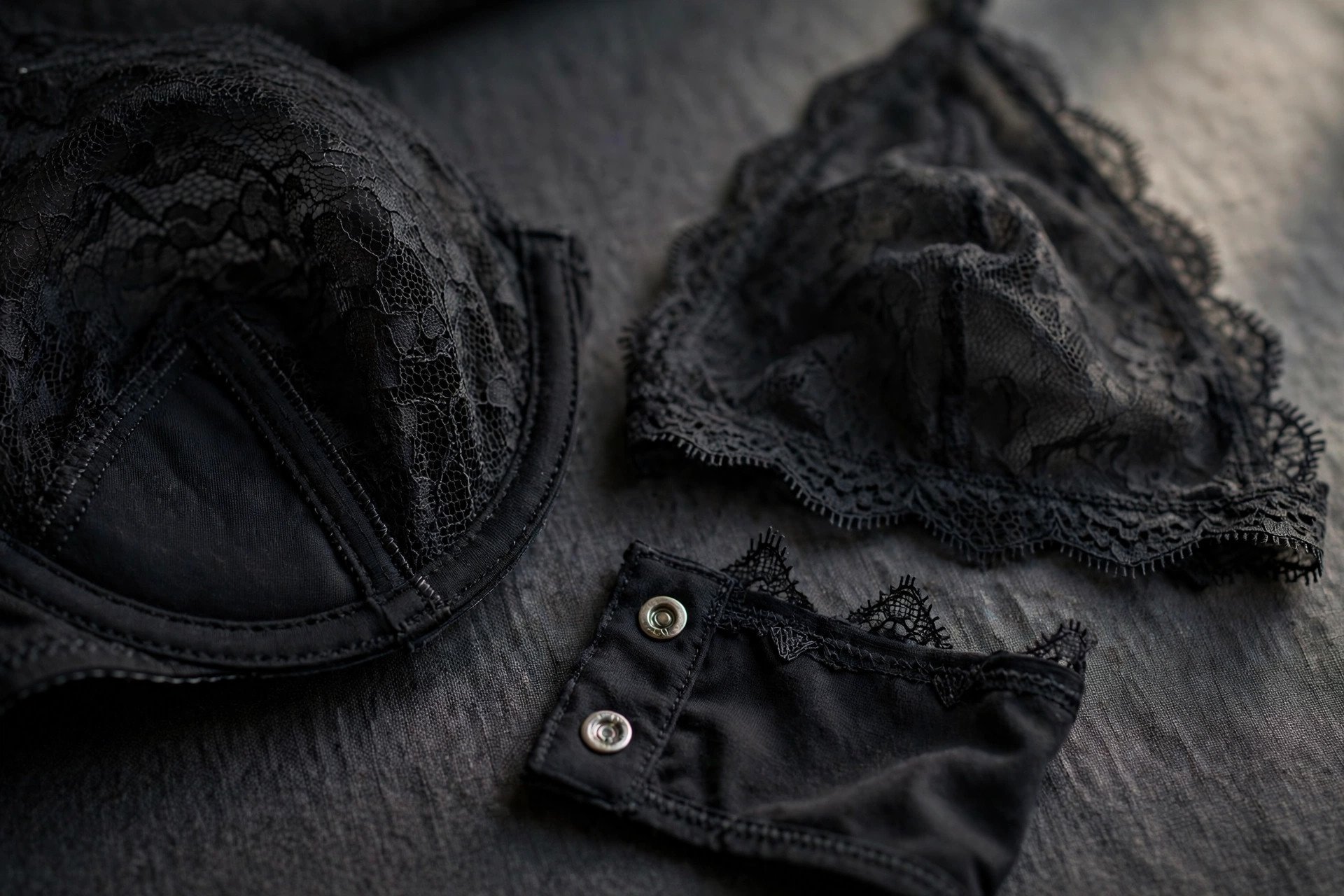
A teddy is a single connected garment that covers the torso from bust to hip, with a built-in bottom. The top flows into the bottom without a separate waistband — think of it as a one-piece swimsuit cut from lingerie fabrics. Most teddies close at the crotch with small snap buttons (a gusset), so the garment can be put on over the head or stepped into.
A babydoll is a two-part concept: a short, loose top plus a separate panty. The top is fitted at the bust, then the fabric releases from an empire seam just under the bust and falls in a short, flared skirt to roughly mid-thigh. The matching panty is a separate piece — usually a thong or brief in a coordinating fabric.
In short: the teddy is one garment with the bottom attached. The babydoll is a top that ends above the hips, with the bottom sold as a separate piece. Everything else — fit behavior, support, sizing difficulty, even bathroom practicality — follows from that architectural difference.
Bust Construction and Support
This is where many shoppers get surprised, because neither style guarantees much support — but they fail at it in different ways.
Teddies span a wide range. At one end are soft, unstructured teddies with triangle cups and no underwire, where the bust gets little more than fabric coverage. At the other end are teddies with underwired cups, padded cups, boning through the torso, and hook-and-eye or snap closures — garments that borrow real structure from corsetry. Because the garment is one continuous piece anchored at the shoulders and the crotch, a well-constructed teddy can hold the bust in place better than its delicate appearance suggests. But support varies enormously between products, so the presence of underwire, boning, or a defined cup seam in the product photos is worth checking.
Babydolls are typically softer at the bust: shelf-style cups, soft triangle cups, or lightly lined cups are the norm, and underwire appears less often. The empire seam sits just under the bust, so the garment’s structure is concentrated in a narrow band — there is no long torso of fabric to anchor against, and no waistband to distribute tension. That makes babydolls comfortable and easy to wear, but it also means bust support is limited by design. If a product photo shows a defined cup seam or underwire casing, that’s a meaningful upgrade in support; if it shows only a soft gathered cup, expect the garment to skim rather than lift.
One honest note: neither style replaces a supportive bra for larger busts in most cases. If support is your priority, look for underwire and structured cups in either style — and check the product photos, not the product title, because neither word on the label guarantees anything.
Waist, Hip, and Torso Fit
Here’s where the architecture really shows its consequences.
A teddy follows your torso. Because it’s one connected piece, the fabric has to travel from your shoulders to your hips in a single span — which makes teddies sensitive to torso length. Too short a torso in the garment and the crotch pulls uncomfortably; too long and the fabric sags at the waist or the bust sits too low. This is the same fit diagnosis we covered in our bodysuit vs teddy guide: with any one-piece, torso length is the measurement most product pages never mention and the one that causes the most fit failures. Waist and hip fit in a teddy are also committed — the garment sits against the body through the midsection, so there’s nowhere for a mismatch to hide.
A babydoll barely cares about your torso. The top ends above the hips and the skirt flares away from the body, so the garment doesn’t need to match your torso length at all — the empire seam just needs to sit near the underbust. Waist and hip measurements matter much less too, because the skirt doesn’t contact the body through the midsection. The critical fit point in a babydoll is the bust: the empire seam and cups need to sit correctly at the underbust, and if the cups are too small or the band too tight, there’s no other structure to compensate. Everything below the bust is forgiving; everything at the bust is not.
This asymmetry is worth remembering: a teddy is a full-torso commitment, while a babydoll concentrates all its fit demands in one narrow zone.
The Bottom: Built-In vs Separate
The bottom is the most practical difference between the two styles, and the one shoppers think about least before ordering.
A teddy’s bottom is built in. It’s part of the garment — usually a thong or cheeky cut with a snap-button gusset at the crotch. That means you don’t choose your coverage: the product page decides it for you. It also means the bathroom question is real — most teddies require unsnapping the gusset (or removing the garment), which is worth knowing before a long evening out. On the plus side, there are no visible panty lines and nothing to ride up or shift independently of the top.
A babydoll’s bottom is separate. The matching panty arrives as its own piece, which gives you three advantages: you can choose the coverage you actually want (some sets offer thong or brief options), you can replace it or wear a different panty without affecting the top, and the bathroom question doesn’t exist. The trade-off is that the two pieces can shift independently — the skirt may ride or twist separately from the panty underneath.
If you’re buying for an evening where you’ll be wearing the piece for hours, this distinction matters more than the silhouette does.
Closures and Getting In and Out
Teddies typically close at the crotch with two or three small snap buttons on a fabric gusset. Some pull on over the head, some step in through the leg openings — the listing usually shows or mentions the snaps if you look. A few fashion-forward teddies skip the snaps entirely (pull-on only), which makes them harder to get into and worth a second look at the product photos.
Babydolls are usually pull-on: over the head, no crotch closure, nothing to unsnap. Some have a hook-and-eye or tie at the back of the neck or under the bust, but the garment’s short, loose cut means closures are minimal. This is one reason babydolls feel effortless to wear — there’s simply less hardware.
Fabrics and Stretch
Both styles are cut from the same family of fabrics — lace, sheer mesh, satin, chiffon, and microfiber blends — but the fabric’s job differs.
In a teddy, stretch matters more, because the garment has to move with the torso and snap closed at the crotch. A non-stretch lace teddy with no gusset snaps is a fit gamble; a mesh-panel teddy with four-way stretch is far more forgiving. When a listing mentions elastane or spandex content, that number matters more for a teddy than for most other lingerie.
In a babydoll, drape matters more than stretch. The skirt is supposed to fall away from the body, so fluid fabrics — chiffon, georgette, soft mesh, silk-like satins — do the visual work. A stiff fabric in a babydoll skirt looks and feels wrong; a fluid one makes the silhouette. Stretch still matters at the bust band, but the skirt itself doesn’t need it.
Sheerness deserves its own caution: product photography is lit to look alluring, not to document opacity. Sheer mesh reads very differently in person than in a studio photo. If coverage matters to you, zoom into the product photos and look for how much skin shows through the fabric in unretouched-looking areas — and check whether the listing mentions lined cups or a lined body.
Coverage: What Each Style Actually Covers
Coverage isn’t just about sheerness — it’s about which parts of the body the garment’s architecture reaches.
A teddy covers the full torso: bust, waist, hips, and bottom are all within the garment, even if the fabric itself is sheer. The visual effect is a continuous line from shoulder to hip. A babydoll covers the bust and ends mid-thigh in front, but the midsection under the skirt is only covered by the separate panty — the skirt itself is a floating layer. The visual effect is a defined bust with an open, airy lower half.
Neither is objectively “more coverage” — they cover different things. If you want the torso visually unified, that’s the teddy. If you want the midsection visually open under a skirt, that’s the babydoll.
Sizing: Which Is Harder to Get Right?
Teddies are harder to size. One garment has to fit the bust, the waist, the hips, and the torso length simultaneously, and most size charts only give you bust-waist-hip — never torso length. Between sizes? The usual advice is to size up for comfort, but with a teddy, sizing up can leave the torso too long and the bust unsupported. This is the style where reading reviews for fit notes pays off most.
Babydolls are more forgiving — with one exception. Because the skirt floats free, waist and hip measurements are nearly irrelevant, and torso length doesn’t matter at all. But the bust is the single point of failure: too small in the cup and the empire seam cuts in; too tight in the band and the whole top rides up. Get the bust right and the rest of the garment takes care of itself. Between sizes in a babydoll, the bust measurement should decide.
How to Identify Each Style in Product Photos
Since labels overlap, here’s how to read a product listing like a detective. These checks take about thirty seconds per product page:
- Is the bottom attached or separate? Look for a continuous line of fabric from the top into a panty-like bottom — that’s a teddy. If the top ends in a free-hanging hem above the hips and there’s a separate panty shown beside it or listed as included, that’s a babydoll.
- Look for the gusset snaps. Zoom into the crotch area of the product photos. Visible snap buttons (or a snap placket) mean a one-piece teddy. No snaps and a free hem mean a babydoll top.
- Find the empire seam. A horizontal seam just under the bust, where the fabric changes direction or fullness, is the babydoll’s signature. Teddies may have seaming too, but they don’t release into a free skirt from that point.
- Check what’s included. Listings usually say “2-piece set” or “includes matching panty” for babydolls. If the listing describes a single garment with no mention of a separate bottom, you’re looking at a teddy.
- Read the product title skeptically. “Teddy babydoll” as a combined title is a red flag that the retailer is keyword-stuffing, not describing. Let the construction checks above overrule the title.
- Look at the back view. Retailers usually include one. A teddy’s back shows continuous fabric to the bottom; a babydoll’s back shows the skirt ending freely.
Common Fit Problems — and What Causes Them
Teddy fit problems:
- Crotch pulling or riding up — the torso length of the garment is shorter than yours. The most common teddy complaint, and the hardest to fix by sizing.
- Gusset snaps popping open — the garment is too small through the torso or hips; the snaps are under tension they weren’t designed for.
- Bust spilling from unstructured cups — soft-cup teddies offer minimal containment; if the cups look soft in the photos, expect skimming, not support.
- Leg openings digging in — high-cut teddy legs are less forgiving than they look; elastic tension varies widely between products.
Babydoll fit problems:
- Empire seam sitting too low or cutting in — the bust/band size is wrong; this is the one measurement that matters and the one most often guessed.
- Cups gaping or flattening — soft cups with no structure can’t adapt to every bust shape; underwired styles hold their shape better.
- Skirt clinging instead of floating — usually a fabric issue (too stiff, or static in synthetic fabrics) rather than a size issue.
- Top riding up — the band under the bust is too loose, so the whole garment migrates upward; size down in the band if the cups still fit.
Which Should You Choose? A Decision Framework
Forget “which is more flattering” — no honest guide can answer that for every body, because fit depends on the individual garment’s construction and your measurements. Instead, choose by what you want the piece to do:
- Choose a teddy if you want a unified, continuous silhouette; you like the look of a one-piece; you don’t mind a snap gusset; and you’re willing to pay attention to torso length and read fit reviews before ordering.
- Choose a babydoll if you want the easiest fit (get the bust right and you’re done); you prefer a separate panty you can choose or replace; you want minimal closures and hardware; or you’re buying your first piece and want the lowest-risk option.
- Choose by occasion practicality: for a long evening out, the babydoll’s separate bottom is simply more practical. For a streamlined look under clothing (if the fabric is opaque enough), the teddy’s one-piece construction avoids separate pieces shifting.
- Choose by support needs: in either style, look for underwire and structured cups in the product photos — the style name won’t tell you, but the construction will.
And if a product title says “teddy babydoll”? Run the photo checks above, identify the actual construction, and shop accordingly. The garment is what it is regardless of what the title claims.
Frequently Asked Questions
What’s the main difference between a teddy and a babydoll?
A teddy is a one-piece garment with the bottom built in; a babydoll is a short, loose top (fitted at the bust, flaring from an empire waist) usually sold with a separate matching panty. The architecture — one piece vs. top-plus-separate-bottom — drives every other difference in fit, support, and practicality.
Is a babydoll the same as a chemise?
No, though they’re related. A chemise is typically longer and falls straighter from the shoulders, more like a short slip dress. A babydoll is shorter, defined by its empire waist and flared skirt. Retailers sometimes blur these labels too, so the same photo-check approach applies.
Do you wear underwear with a babydoll?
Babydolls are usually sold with a matching panty as part of the set — check the listing for “includes” or “2-piece set.” Because the panty is separate, you can also wear a different one; the top works independently.
Can you wear a teddy under regular clothes?
Sometimes. An opaque, smooth-fabric teddy can work like a bodysuit under clothing, but sheer lace or mesh teddies, snap gussets, and textured fabrics usually show through or add bulk. Check the fabric and opacity in the product photos before planning an outfit around it.
Which is easier to fit — a teddy or a babydoll?
A babydoll, in most cases. Its skirt floats free of the waist and hips and it isn’t sensitive to torso length, so the bust is the only critical fit point. A teddy has to fit bust, waist, hips, and torso length in a single garment, which makes sizing genuinely harder.
The Bottom Line
A teddy and a babydoll aren’t just two vibes — they’re two different architectures. The teddy commits the whole torso to a single connected garment with a built-in bottom; the babydoll concentrates its fit in the bust and lets everything else float free with a separate panty. Neither is universally better, and neither label on a product page can be trusted on its own.
Shop by construction: check whether the bottom is attached, look for the gusset snaps, find the empire seam, and read what’s actually included. Do that, and the choice between teddy and babydoll stops being a guessing game — whichever one you pick, you’ll know exactly what you’re getting.
1 thought on “Teddy vs Babydoll: What’s the Difference (and Which Should You Choose?)”
Comments are closed.